
Accessibility in Buildings and at Events
Have you ever considered how accessible your building, event, meeting space or community groups are to people who are hard of hearing.
It’s important that hard of hearing people feel welcome from the minute they enter your building. Ask the individual about their access and communication preferences.
Reception area
This is the first impression of your group, organisation or event. Consider the levels of traffic around reception.
Ensuring the area is well lit and the loop system is clearly displayed will help a person with hearing loss feel welcomed into your building.
Lighting
When communicating with a person with hearing loss, lighting in the room is vital. Natural lighting works best.
Some people with hearing loss will lipread to help understand what is being said which is why good lighting is key.
Acoustics
Often office spaces have wooden flooring, high ceilings and hard furnishings. Try to choose a room with low ceilings, soft furnishings and carpet. This will help to absorb any echo within the room.
Group numbers
If you are holding an event and have a participant who has a hearing loss, smaller groups are easier to follow and lipread.
Check with your participant if a lip-speaker is required or if they have any communication needs.
Preparation
If you have preparation materials or an agenda, forward this information to the person with hearing loss prior to the event. Feeling prepared for the topic that will be discussed will be a huge help.
Forward facing activities
Ensure activities are forward facing and visible to everyone in the room. The guest speaker or person presenting needs to be clearly visible and it’s also a good idea for them to stay still!
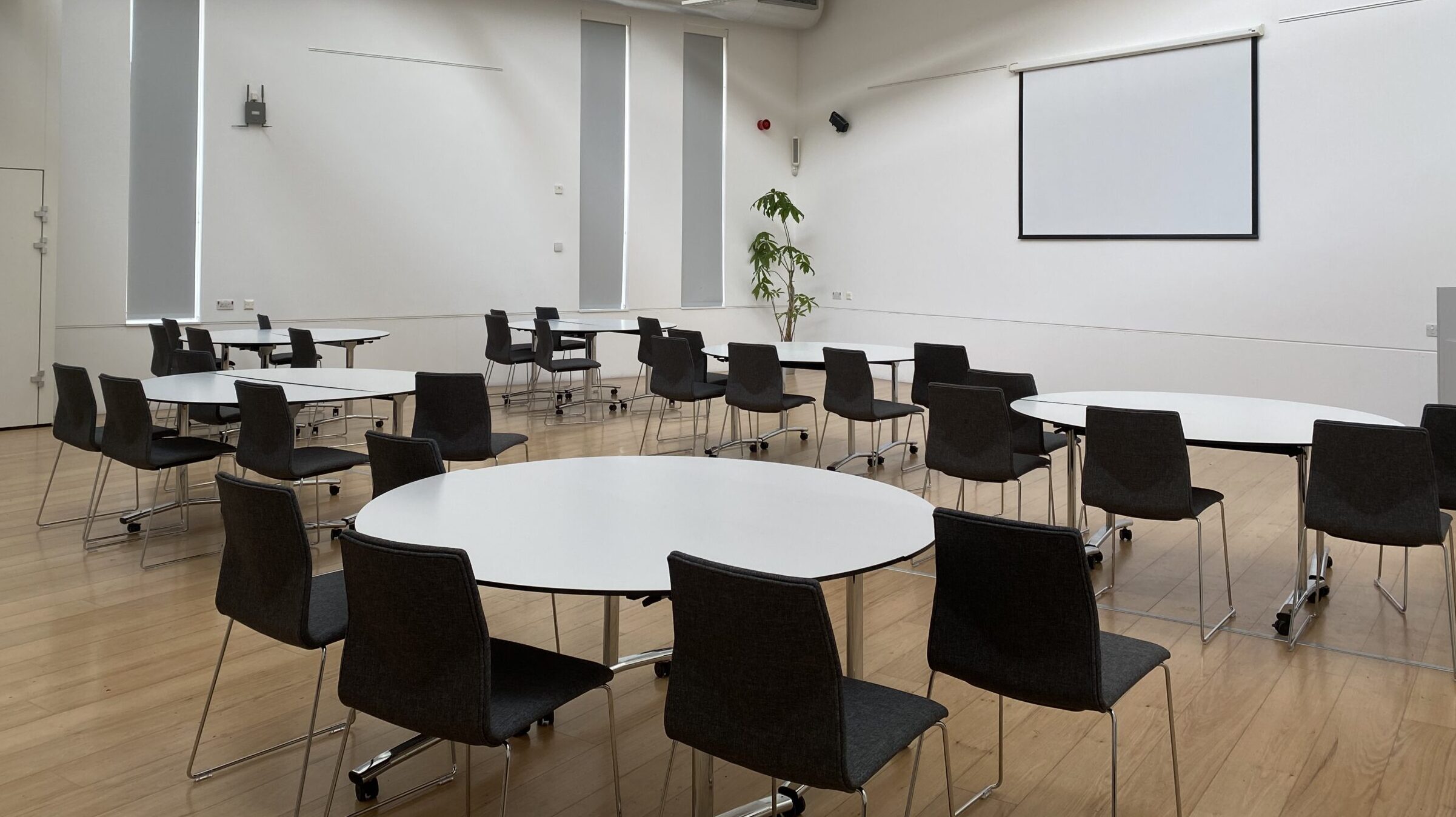
With regards to the layout of the room, tables and chairs, it is recommended that this is in a semi-circle format so that it’s easier for the person with hearing loss to see everyone else within the group.
Hands up to speak
Ensure that attendees don’t talk over one another, raise their hand for a question or to speak.
Using the telephone
Hard of hearing people may struggle on the telephone. If you find someone is saying pardon often or asking you to repeat yourself, consider a different way of communicating i.e. email, text or video call.
Online meetings
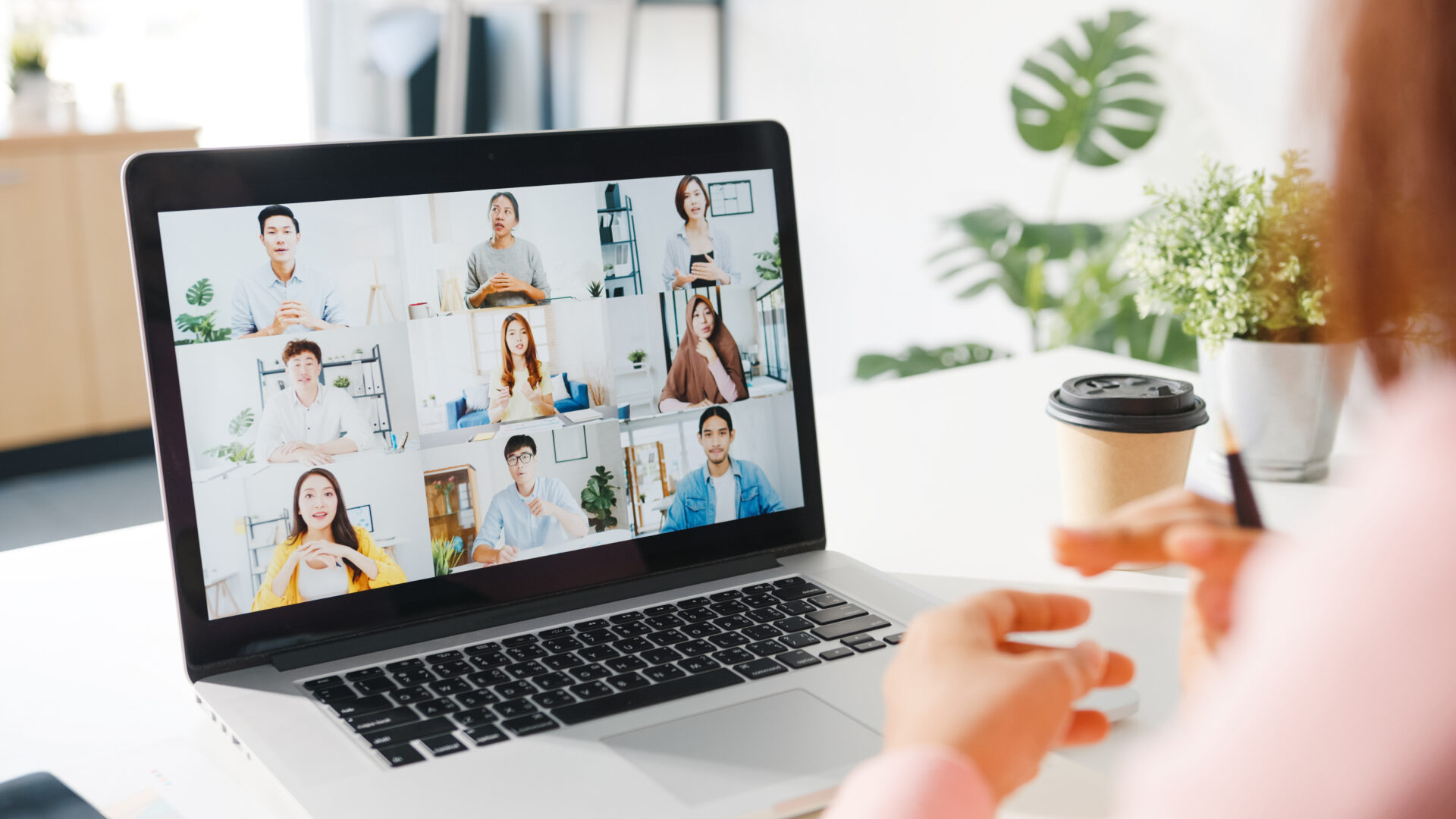
Online meetings may be testing for an individual with hearing loss. Make sure that everyone has selected ‘mute’ within a meeting and ask them to raise their hand when they have a question or want to speak. This way, the person with hearing loss can follow the conversation more easily. Where closed caption facilities are available, turn these on.
Loop System
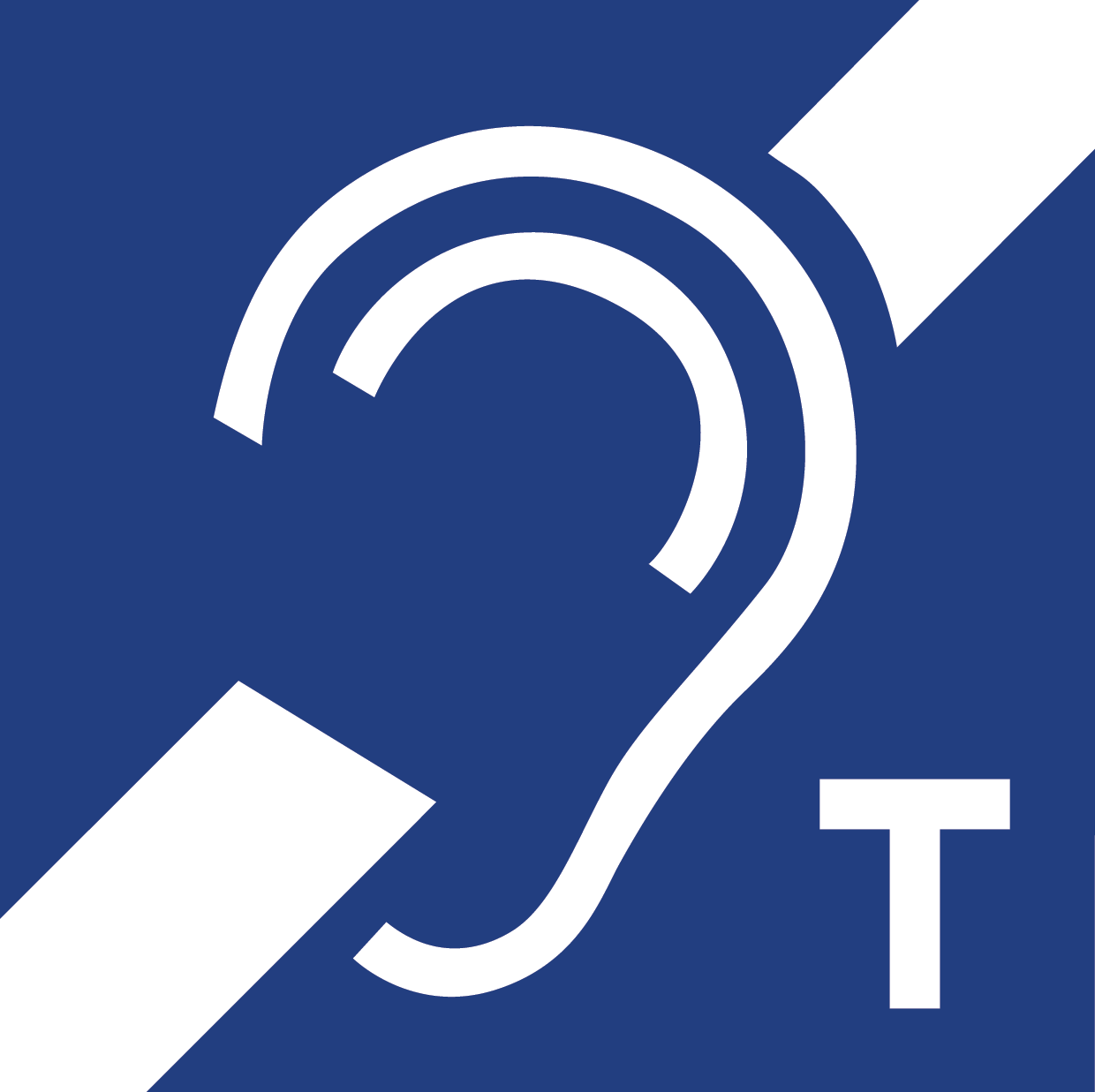
Loop systems are a great piece of equipment for hearing aid users.
If you have a loop system in your building, you will need to ensure staff know how to use it and that it is switched on.
Display the loop logo in a prominent area and ask your attendee if they can hear the speaker clearly through the loop.
There are many loop systems on the market. If you are not sure or need guidance, contact us and one of our local teams will help.
This factsheet focuses on accessibility for those who are hard of hearing. Deaf participants who may use British Sign Language or Sign Supported English, will have different access and communication needs. For example, interpreters will likely be required. Please see our ‘Working with Interpreters’ factsheet for more information.
If you would like further information or support, please visit our website, www.bid.org.uk, to see the other resources we have available and the services we deliver in your area. Alternatively, you can email us on info@bid.org.uk.
If you would like to receive the information in a different format, such as Braille, large print or Audio, then please contact us at marketing@bid.org.uk.